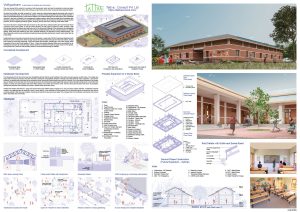
A safe haven for students and community, the school has been thoughtfully designed to be flood-resistant, eco-friendly, and inclusive, with a special focus on the Terai region, where seasonal flooding is a common issue. The design prioritizes safety, sustainability, and the flexibility to grow and evolve with the needs of the community over time.
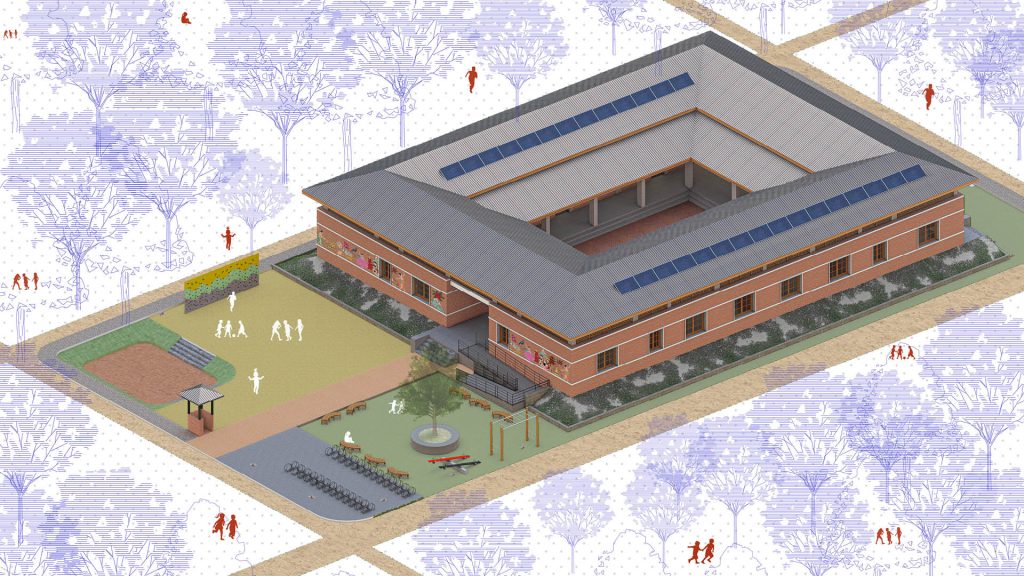
The school is placed at the center of a rectangular plot, surrounded by open green spaces on either side. These areas are not just for play, they also help absorb rainwater during heavy flood and rain, supporting the site’s natural drainage. The main entrance is positioned on the west, guiding visitors into a modular building that has been planned to allow for future vertical expansion as the number of students increases. To keep the central area active and open, a parking zone is placed into the southwest corner for easy access without interfering with daily school life.
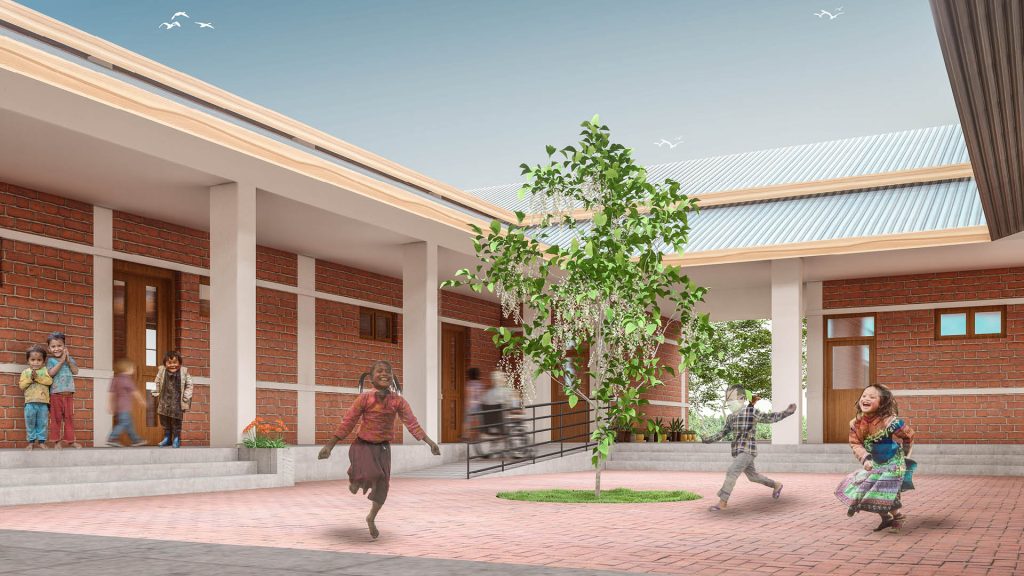
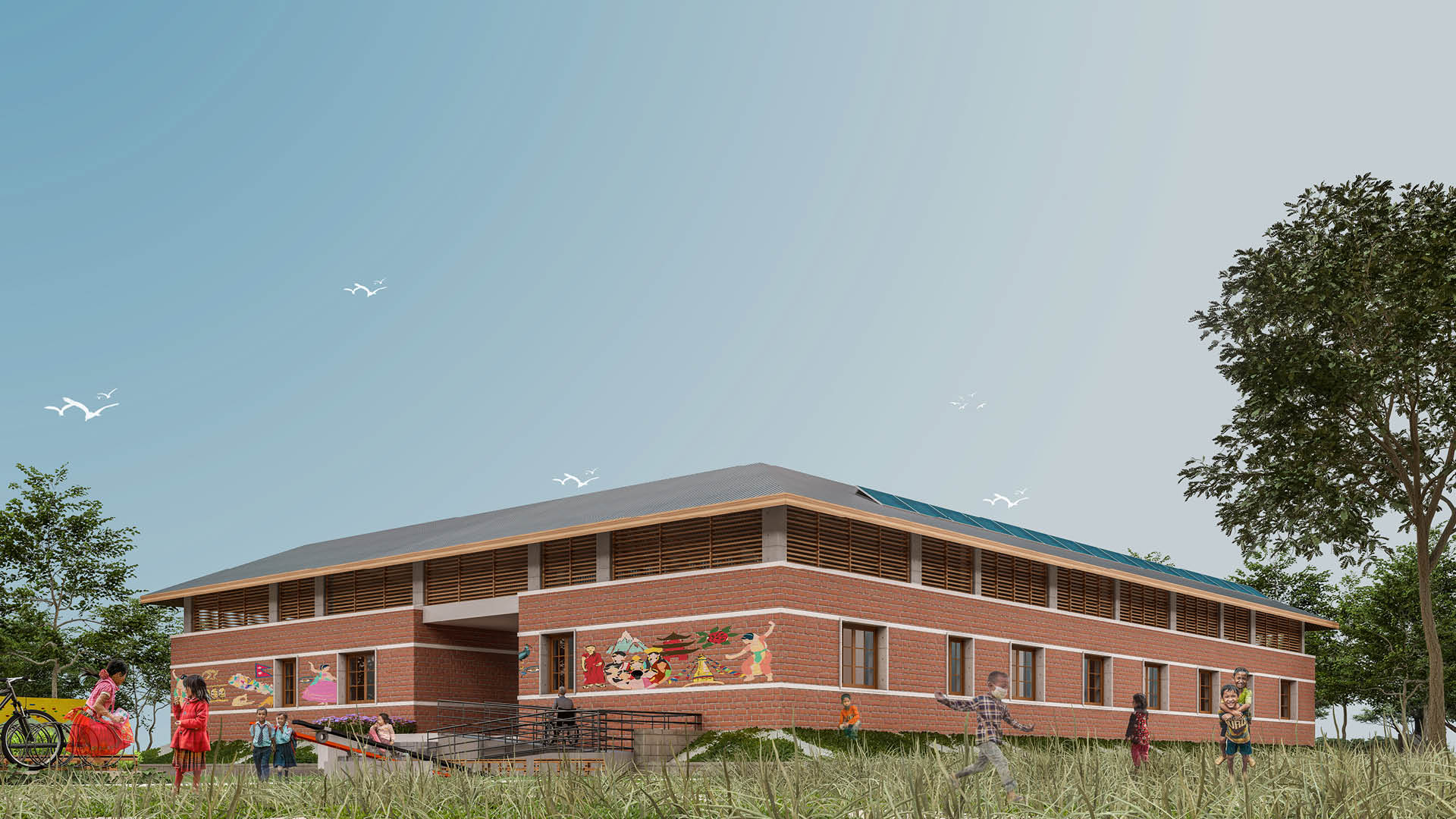
In response to flood risks, the main structure is elevated one meter above the ground. Around it, landscaped mounds planted with native species help absorb and manage excess rainwater. One unique feature is the sunken open-air theatre on the northwest side. It not only collects floodwater but also serves as a vibrant space for gatherings and performances. The central courtyard, also sunken, plays multiple roles: as a social area, a place for children to play, and a catchment space during storms.
Collected rainwater is channeled into an underground storage system, where it’s kept for reuse in gardening, toilet flushing, and general cleaning: significantly cutting down on water waste. The southeast corner of the site includes a kitchen garden, which also functions as a wetland to filter water naturally, while offering hands-on learning experiences in sustainable farming. Trees line the outer boundary, acting as bioswales that filter runoff and create shaded, cooler surroundings.
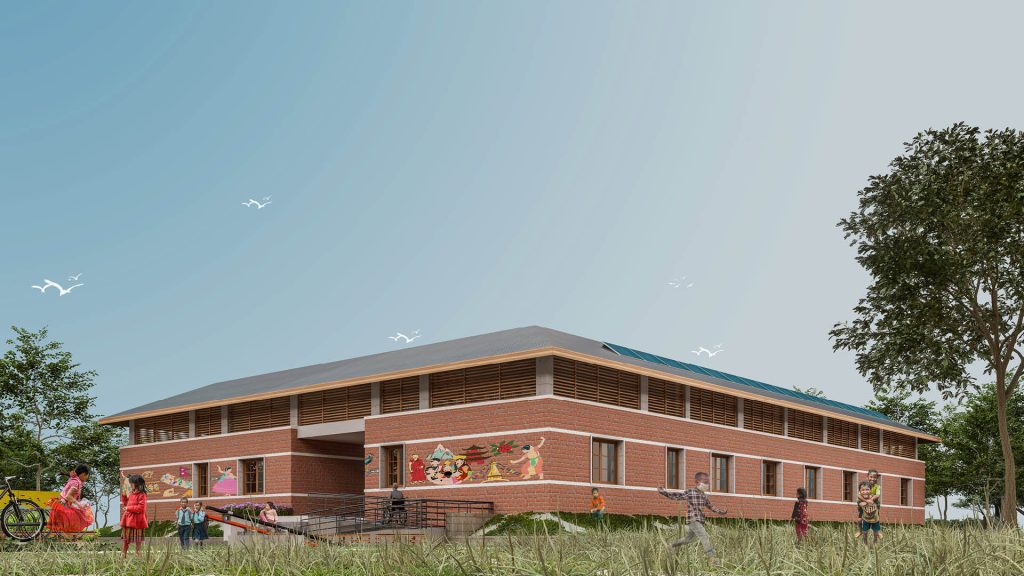
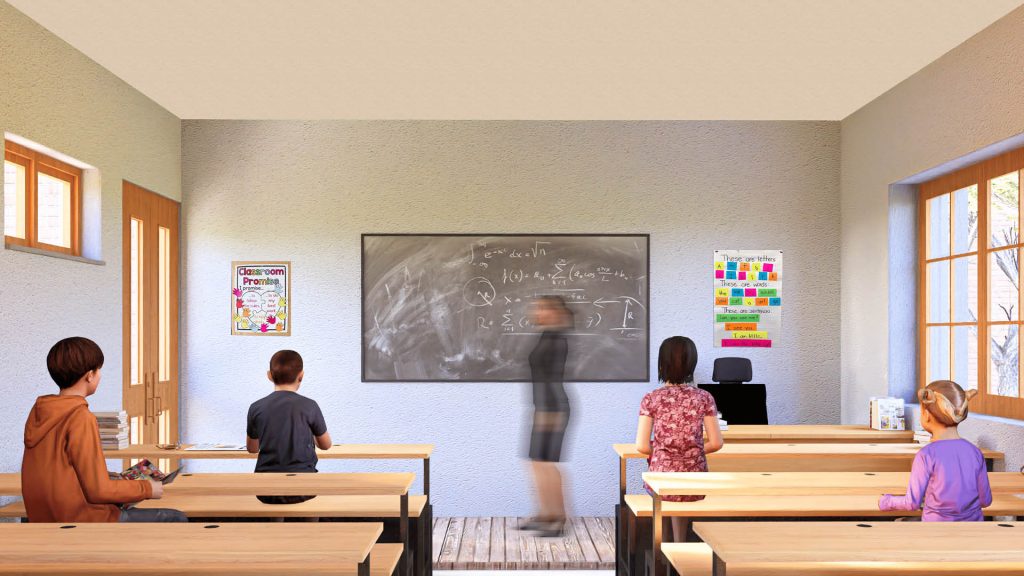
Classrooms are oriented to the south to capture daylight and reduce the need for artificial lighting. Good airflow is ensured through bamboo louvers and smartly placed windows, while walls made of Compressed Stabilized Earth Blocks help keep indoor temperatures comfortable. Solar panels on the roof supply renewable energy, and a dedicated attic space provides a safe zone during extreme floods. Ramps make the entire facility accessible to all.
In every aspect, this school reflects a community-driven, resistant, and sustainable design; ready for today’s needs and tomorrow’s challenges.